Why Confidence Can Take Time to Return After a Hospital Stay
Leaving hospital should feel like a positive step, particularly after a serious illness or a lengthy recovery.
If your older relative has spent time in hospital, even familiar activities like walking to the bathroom or getting dressed can feel daunting. The fear of falling or becoming unwell again can also affect their confidence long after they’ve been discharged.
So, why does a hospital stay affect an older adult’s confidence and what role does convalescent care play in helping them regain their independence? Keep reading to learn more.
How Can Older Adults Rebuild Confidence After a Hospital Stay?
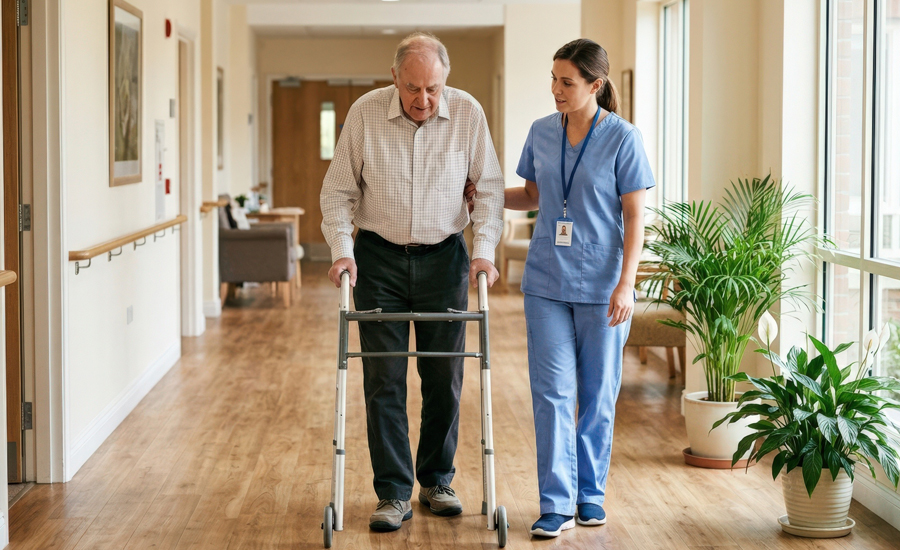
If your loved one has just come out of hospital, helping them regain independence starts with manageable daily activities that allow them to become comfortable with their abilities again. During convalescent care, this could mean practising getting out of bed safely, walking to the dining room with assistance or washing and dressing with less support. Care staff can follow rehabilitation advice from physiotherapists and gradually reduce assistance as the resident’s strength and confidence improve. It’s important to ensure progress at a comfortable pace to reduce anxiety about falling or becoming unwell again.
Why Older Adults Lose Confidence Following a Hospital Stay
A hospital stay can leave older adults feeling less capable than before they fell ill.
Even when their treatment has been successful, they might notice that everyday activities require more effort or that they need assistance with things they previously managed independently.
Several factors can contribute to this loss of confidence:
Loss of Muscle Strength During Hospitalisation
Spending long periods in bed or sitting down can lead to deconditioning syndrome, where muscles lose strength through inactivity. Older adults are particularly vulnerable because age-related muscle loss can make recovery harder after reduced movement.
For example, your loved one who previously walked around their home without assistance could find standing up from a chair or climbing a few stairs noticeably harder after a week in hospital.
These changes can make them question whether they’re physically capable of managing independently, especially if they’re worried about falling.
Fear of Falling or Becoming Unwell Again
An older adult who has been admitted to hospital following a fall can become understandably nervous about walking without assistance.
This fear could continue after their injury has healed, leaving them avoiding activities they previously enjoyed because they’re worried about another accident.
Unfortunately, reduced physical activity can worsen muscle weakness, making it even harder to regain confidence in getting around independently again. This is why appropriate rehabilitation and mobility support are imperative during recovery. Also, light group exercises a few times a week will help boost confidence in movement as time goes by.
Becoming Accustomed to Relying on Others
During a hospital stay, nurses and healthcare assistants often provide more support than an older adult usually needs at home.
After discharge, adjusting to managing everyday activities again can feel daunting, particularly if they’ve spent several weeks relying on staff for assistance.
Convalescent care provides an opportunity to practise these activities in a supported environment, allowing residents to gradually rebuild their confidence before returning home.
Anxiety About Managing at Home
Just because your loved one has been discharged from hospital doesn’t always mean they are ready to manage at home alone.
They will likely have concerns about getting to the bathroom during the night, preparing meals when they’re still feeling weak or coping without someone nearby if they become unwell.
These worries can be mdifficult for older adults who live alone. After spending several days or weeks surrounded by hospital staff, the prospect of returning to an empty house can feel overwhelming.
Even when an older adult is medically fit for discharge, they may need additional time and support to feel confident about returning home. A period of convalescent care in a care home gives them an opportunity to recover further while their ongoing care needs are assessed.
Confusion and Changes in Cognitive Function
Hospitalisation can sometimes affect an older adult’s memory and concentration, which can affect their awareness of their surroundings, particularly after a serious illness.
One possible cause is delirium, a sudden change in mental function that can develop during hospitalisation. It can cause confusion, disorientation and difficulty concentrating. Although delirium often improves as the underlying cause is treated, symptoms can persist after discharge.
An older adult recovering from delirium may feel frightened by what happened or become less confident about making decisions and managing daily activities.
** It’s important that new or worsening confusion is assessed by a healthcare professional, as it shouldn’t automatically be attributed to ageing or dementia. During convalescent care, staff can monitor changes in a resident’s behaviour and follow their discharge plan while supporting their recovery.
The Role of Convalescent Care in Rebuilding Confidence
For older adults who need more time to recover after leaving hospital, convalescent care provides a much-needed period of additional support before returning home.
During their stay at a convalescent care home, staff can support residents in several ways, including:
- Understanding what the resident can safely manage – Staff review hospital discharge instructions and assess the resident’s current care needs, including identifying activities that require assistance and any post-surgery or post-illness precautions.
- Providing reassurance after setbacks – Recovery isn’t always linear or straightforward. A resident who managed to walk confidently one day could feel exhausted or unsteady the next. In cases like this, staff adjust the level of assistance, allowing time for rest and reassuring the resident that a difficult day doesn’t necessarily mean their recovery is going backwards.
- Helping residents manage their medication – Prescription changes after hospital discharge can cause confusion. This is especially true for older adults taking several medicines. Having care staff on hand to follow discharge medication instructions, explain the prescribed routine and raise any concerns with the appropriate healthcare professional can help during this difficult time.
- Supporting recovery through regular meals and hydration – Poor appetite is actually quite common following illness. Inadequate food or fluid intake can affect energy levels and physical recovery. Trained care staff in a convalescent care home can monitor what residents eat and drink, offer assistance at mealtimes and seek clinical advice if their intake becomes a concern.
- Identifying equipment and support needed at home – Before a resident returns home, staff can discuss any remaining difficulties with the resident, their family and relevant healthcare professionals. For example, an occupational therapist may recommend grab rails or a raised toilet seat to make everyday activities safer.
- Involving families in discharge planning – Relatives need to understand what their loved one can currently manage and whether they will need additional support at home. Clear discussions about care arrangements can reduce uncertainty for everyone involved.
Supporting Your Loved One’s Confidence After a Hospital Stay
If your loved one seems more nervous or dependent on others since leaving the hospital, it can be difficult to know how much encouragement to give them. You obviously want to see them getting back to their usual self, but pushing them to do too much before they’re ready can leave them feeling even less confident.
Try to focus on the activities they’re worried about. If they’re reluctant to walk around without assistance, ask what’s concerning them.
Are they feeling unsteady, experiencing pain or frightened of another fall? Understanding the reason gives you a better idea of what support they need and whether their rehabilitation team should review their recovery plan.
And remember, being discharged from hospital doesn’t mean your loved one has to manage everything independently straight away.
If they’re still struggling with everyday activities or feel anxious about returning home, a convalescent care home can provide additional recovery time with professional support. This gives your loved one the opportunity to regain confidence at a manageable pace, so returning home feels less daunting when they’re ready.
Ready to explore...
