Grandchildren Visiting A Relative With Dementia – Simple Ways To Help It Go Well
Watching your parent or grandparent navigate dementia is hard enough. Adding the complexity of preparing grandchildren for visits can feel overwhelming. But these visits matter for everyone involved.
Research from the Alzheimer’s Association shows that meaningful social connections can reduce agitation and improve quality of life for people with dementia, even in advanced stages.
But the key to a smooth visit is preparation. Children who understand what to expect handle these visits better and your relative with dementia responds more positively to prepared, calm visitors.
Keep reading our guide on preparing your child for a care home visit to learn more.
How Do You Prepare A Child To Visit Someone With Dementia?
Preparing a child starts with an honest explanation before the visit. Dementia can be described in simple terms that match the child’s age, focusing on what they might notice rather than medical details. Younger children might need more reassurance that their loved one is confused or forgetful, but still cares about them. Older children can usually understand that dementia affects memory and thinking, which can change how a person speaks or behaves.
It also helps to explain what the child could see during the visit, including their grandparent repeating questions, forgetting names, becoming upset or losing track of a conversation. When children know this in advance, they are less likely to feel frightened or confused in the moment.
Finally, many children worry that their behaviour or words affect others, so providing as much reassurance as possible will help them approach the visit with confidence rather than fear.
Timing Matters More Than You Think
Visit when your relative is typically most alert. For many residents with dementia, this is mid-morning, after breakfast and before afternoon fatigue sets in. Late afternoon and evening often bring increased confusion, as healthcare professionals call it ‘sundowning’, making visits more challenging for everyone.
Keep visits short. Around thirty to forty-five minutes is usually the sweet spot. Your relative with dementia has limited energy for social interaction and children have limited capacity to manage the emotional complexity of these visits. That’s why a good, shorter visit beats an exhausting long one.
What To Bring When Visiting a Care Home With Children
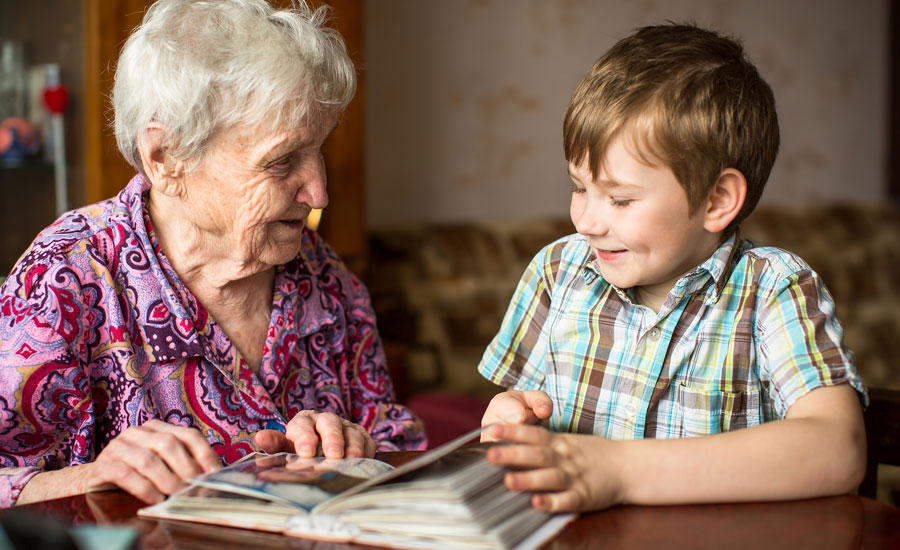
After prepping your children for the visit, try to come up with some conversation starters that work with dementia. You could also bring photo albums from when your relative was younger, which can often spark memories and stories. A playlist of music from their youth can create an instant connection with the Cleveland Clinic, noting that music memory often remains intact longer than other types of memory.
Simple activities work best:
- Large-piece puzzles
- Looking at picture books together
- Folding laundry (people with dementia often appreciate feeling useful)
- Sorting buttons or organising items
- Playing with a pet if one is allowed and your relative likes animals
It’s best to avoid activities requiring short-term memory or complex rules.
Traditional card games become frustrating with dementia and video calls with distant relatives can be confusing. Loud, chaotic environments with multiple people talking create overwhelm, so keep it as simple as possible.
Coach Your Children On Communication
Teach these specific techniques before heading to the dementia care home:
- Approach from the front. Coming up from behind can startle someone with dementia.
- Speak clearly and use simple sentences. “Hi Grandma, I’m Emma, your granddaughter” works better than “Hey! Remember me from last month?”
- Don’t correct or argue. If Grandpa thinks you’re someone else or misremembers a detail, go with it. Arguing causes distress and achieves nothing.
- Use yes-or-no questions. “Would you like some water?” is easier to process than “What would you like to drink?”
- Pay attention to body language. If your relative seems agitated or tired, it’s time to wrap up.
When Things Don’t Go As Planned
Sometimes your relative won’t engage. They might be having a bad day or they might not recognise anyone. So, prepare your grandchildren for this possibility and explain that if this happens, it’s not personal and doesn’t mean they failed.
If your relative becomes upset or the visit clearly isn’t working, it’s okay to leave early.
Tell your children beforehand: “If Grandma seems really confused or upset, we might need to go, and that’s completely fine.” If your relative says hurtful things, such as asking “Who are you?” or saying “I want you to leave,” then remind your children this is the disease talking, not their grandparent’s true feelings.
What About Teenagers?
Teenagers face unique challenges with these visits to dementia care homes because they’re old enough to fully understand the progressive nature of dementia, which can make visits emotionally heavy, but they’re also at an age where peer relationships dominate, making regular visits to a confused grandparent feel burdensome.
Be direct about why you’re asking them to visit. “I know this is hard, but your presence matters to Grandpa, and these visits help you process what’s happening” beats vague appeals to family duty.
Give teenagers specific roles where they can help with technical tasks (e.g., setting up a music player), taking photos or helping with simple care tasks, if appropriate. Having a job makes visits feel less awkward for them.
Regular Visits Build Comfort
First visits are often the hardest, but the good news is that each subsequent visit typically gets easier as children learn what to expect and develop their own relationship patterns with their changed grandparent.
So aim for consistency over perfection because regular short visits beat sporadic long ones. Your children will develop their own ways of connecting, through humour, activities or quiet companionship.
After each visit, debrief. Ask what went well and what felt hard. Let your children express their feelings without judgment because these conversations help them process the experience and prepare for next time.
It’s worth mentioning that some situations call for skipping a visit entirely.
There might be times that your relative is acutely ill, extremely agitated or in a concerning mental health state, and it’s best to protect your grandchildren from witnessing that. If your child is sick or emotionally overwhelmed, visits can wait.
Trust your judgment. You know your children and your relative best.
What Makes A Dementia Visit Successful
Preparing children to visit relatives with dementia takes effort, but it’s an effort that pays off.
These visits maintain family bonds, teach children about compassion and ageing, as well as providing your loved one with dementia moments of connection.
The visit doesn’t have to be perfect, just aim for kind ones, where everyone feels as comfortable as possible, given difficult circumstances. And that’s completely achievable with the right preparation.
Ready to explore...
